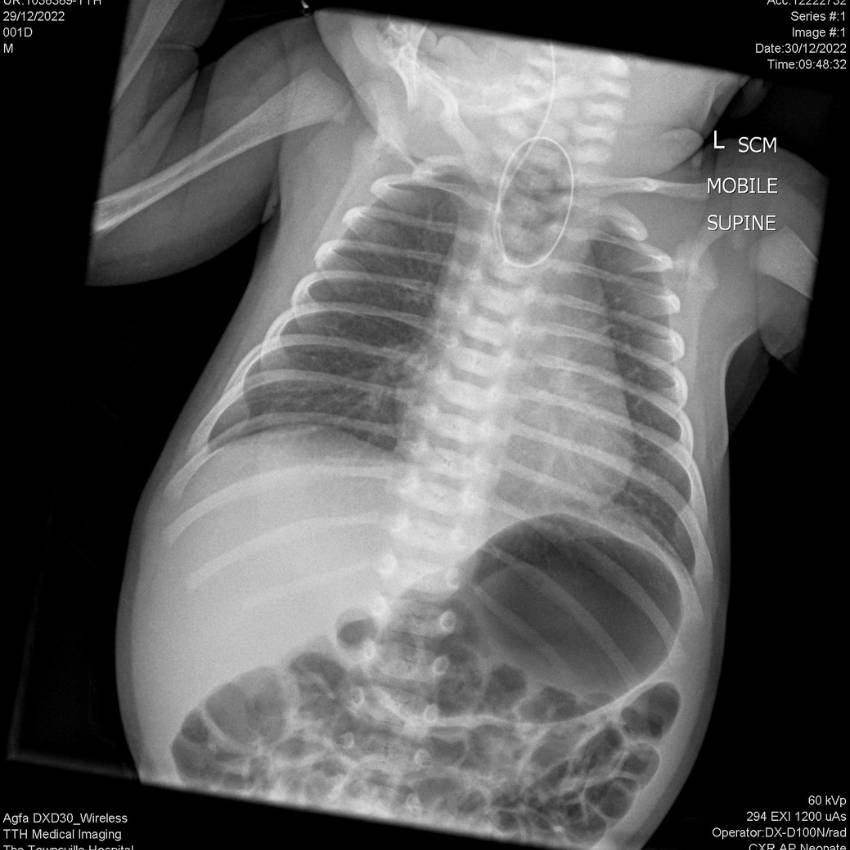
Oesophageal atresia and tracheo-oesophageal fistula (OA/TOF) are birth defects affecting the oesophagus (food pipe) and trachea (windpipe) where the food pipe is incomplete and there is an abnormal connection between the food and the windpipe. This is diagnosed when babies have difficulty feeding after birth or have frothy, white bubbles in the mouth.
This is a medical emergency that requires immediate attention in the newborn ICU. Management involves stopping all oral feeding and using a suction tube to keep the baby’s airway clear. Surgical repair is performed soon after birth to connect the two ends of the oesophagus and close the abnormal connection.
With modern medical care and surgical techniques, most babies have successful surgeries and go on to live normal, healthy lives.
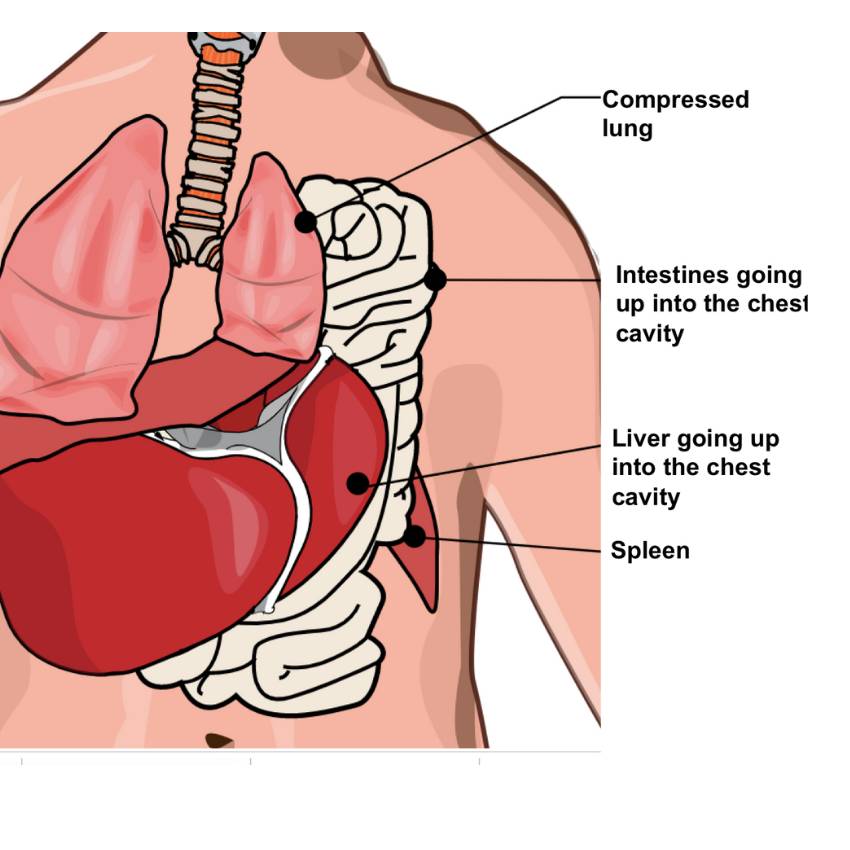
Congenital intestinal anomalies are a group of birth problems where a part of the baby’s gastrointestinal tract does not form properly. These can include blockages (atresia), twisted intestines (malrotation with volvulus), or missing nerve cells in the colon (Hirschsprung’s disease).
The presentation varies depending on the type of anomaly and may include feeding difficulties, abdominal swelling, green vomiting or failure to pass green motion.
Treatment is the surgical repair of the problem. Early diagnosis and timely surgical Interventions are crucial for a good outcome.
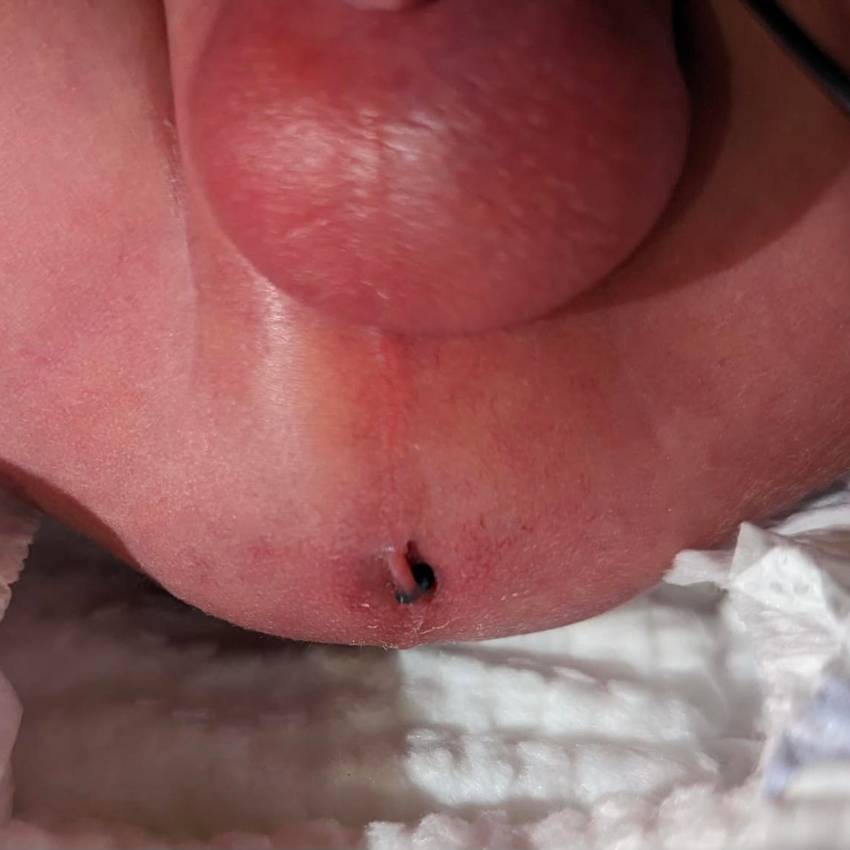
Absent anus is a condition where a baby’s anus (potty hole) does not form properly or is absent and may connect to the urinary tract.
Treatment is surgical and depends on the specific problem. A temporary colostomy might be performed first, creating an opening in the tummy to allow stool to exit into a bag. This gives the baby time to grow before a definitive surgery is performed to create a proper anal opening. The colostomy is then closed later.
With modern surgical techniques, the long-term outlook for children with anorectal malformations is very positive.
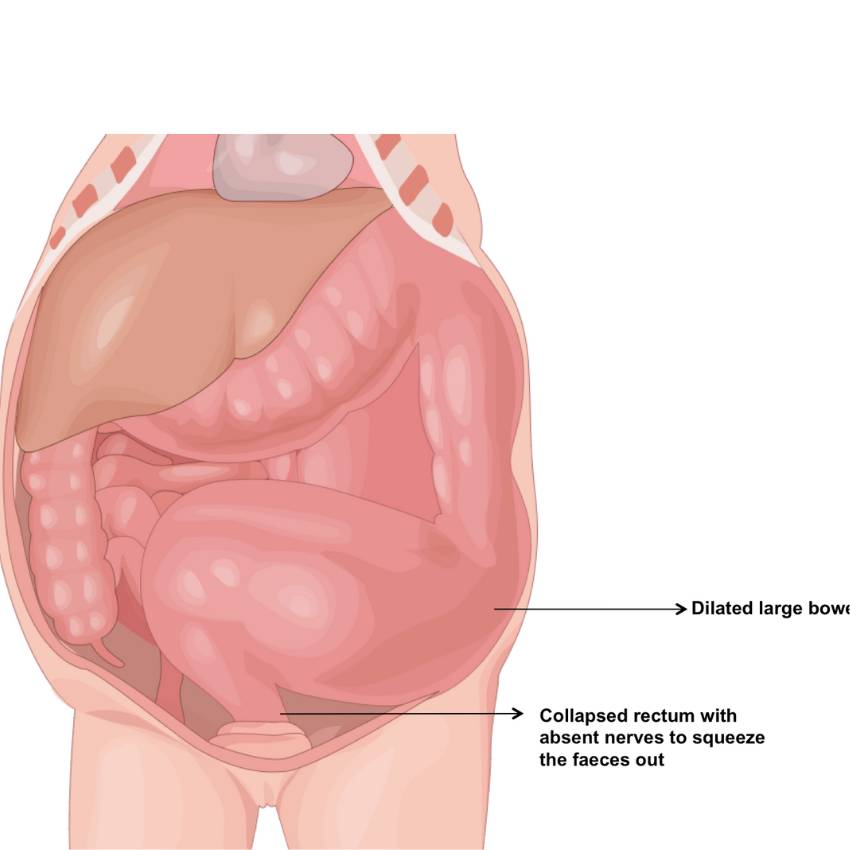
Hirschsprung’s disease is a condition where nerve cells are missing from a part of the large intestine. Without them, that segment of the intestine remains tightly constricted, causing a blockage and preventing stool from passing. This can lead to severe constipation, a swollen abdomen, and vomiting.
Diagnosis is typically made after birth, though milder cases might be found later in childhood. A biopsy of the intestinal wall, as well as some special X-rays, can help with diagnosis.
Treatment is always surgical. The affected, nerveless section of the bowel is removed, and the healthy portion of the intestine is connected to the anus. This may either be a \ single operation or a temporary colostomy may be needed first.
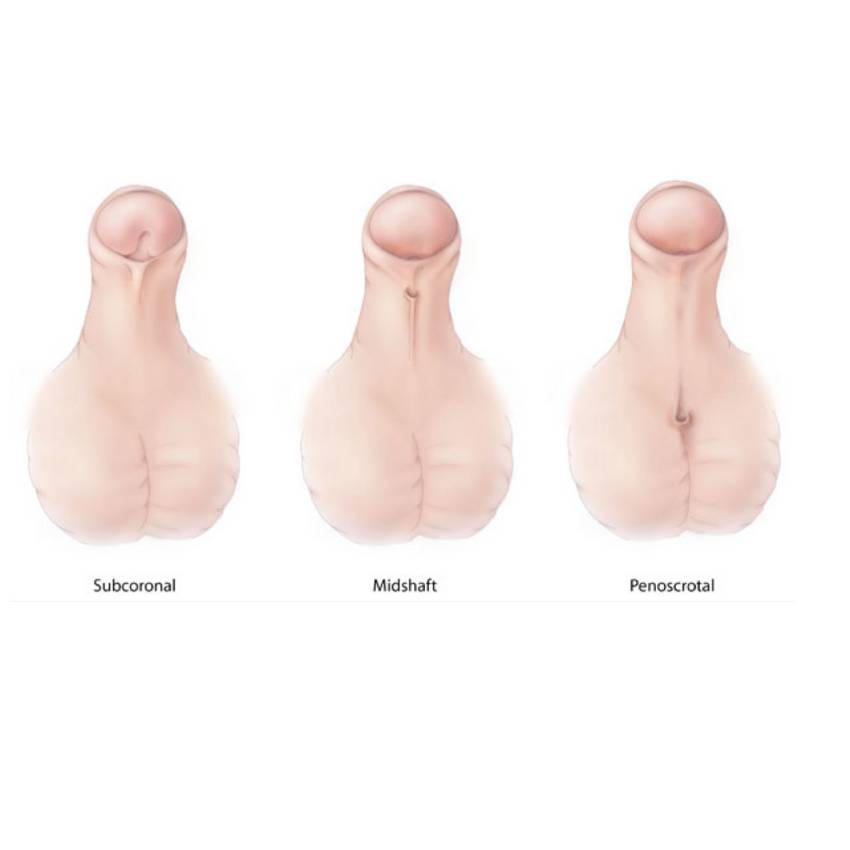
Hypospadias is a common condition in boys where the opening of the urethra, the tube that carries urine out of the body, is not at the tip of the penis. Instead, it is located somewhere on the underside of the penis and the penis may also have a downward curve, a condition called chordee.
Hypospadias is usually diagnosed at birth during a physical examination. The condition does not cause any immediate health risks, but it can affect a boy’s ability to urinate standing up and can cause issues with sexual function later in life.
The treatment for hypospadias is a surgical repair, typically performed between 6 and 18 months of age. With a successful surgery, the long-term prognosis is excellent.
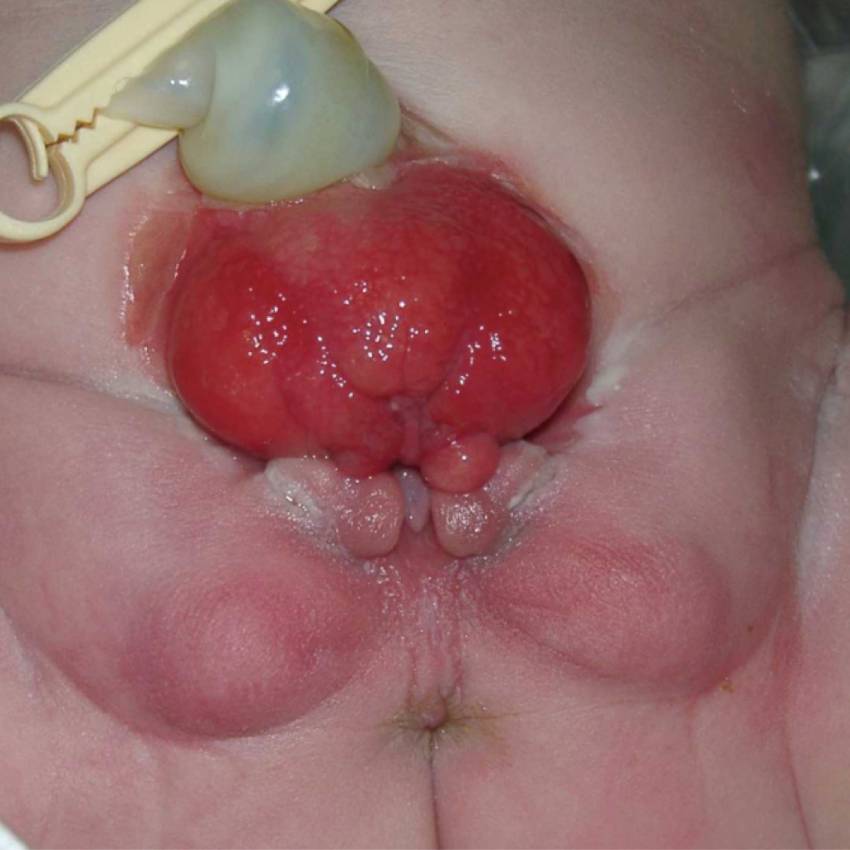
Bladder exstrophy is a rare condition where the bladder is open and exposed on the outside of the abdomen. This can be alarming for parents, but with specialized medical care, children can live full and healthy lives.
Management involves a series of surgical procedures, often starting soon after birth. The primary goal is to close the bladder and abdominal wall, reconstruct the urethra and genitals, and establish urinary control.